
Becoming pregnant after age 35 is more common than ever. While pregnancy after 35, often called advanced maternal age (AMA), does come with a slightly higher chance of certain complications, most women go on to have healthy pregnancies and healthy babies.
Pregnancy at age 35 or older has a higher chance of certain complications, however, it doesn't mean something will go wrong. Instead, it means your provider may recommend additional monitoring, screenings, or OB ultrasounds throughout your pregnancy to help identify potential concerns early and support the healthiest possible outcome for you and your baby.
Because pregnancy risks continue to increase gradually with age, women who will be 40 or older at the time of delivery may benefit from further additional monitoring or recommendations based on their individual pregnancy.
At Moreland OB-GYN, our experienced OB providers deliver personalized pregnancy care for women 35 and older, helping you understand your options, monitor your baby's development, and feel confident throughout your entire pregnancy.
 Being 35 or older does not automatically mean your pregnancy is considered high-risk. Many women experience uncomplicated pregnancies. However, your provider may recommend additional appointments, screenings, or ultrasounds based on your age and any other medical factors.
These extra touchpoints allow your Moreland OB-GYN provider to monitor both your health and your baby's development, identify potential concerns early, and provide the personalized care you need throughout your pregnancy.
Your care plan may include:
More Frequent Prenatal Visits — Regular prenatal appointments allow your provider to monitor your health, answer your questions, track your baby's growth, and identify any changes that may require additional care.
Additional OB Ultrasounds — You may have additional OB ultrasounds to monitor your baby's growth, check amniotic fluid levels, assess fetal well-being, and confirm your baby is developing as expected.
Expanded Lab Work and Screening — Your provider may recommend additional lab work or genetic screening based on your age, medical history, or other risk factors. You will also be routinely screened for conditions that are more common with mature pregnancy, including chromosomal conditions, gestational diabetes, and preeclampsia.
Every recommendation is based on your individual pregnancy, not your age alone. Your Moreland OB provider will explain each test, answer your questions, and work with you to develop a care plan that supports a healthy pregnancy for both you and your baby.
 Carrying a pregnancy at 35 or older comes with a slightly higher chance of certain complications. Your Moreland OB-GYN care team is experienced in identifying and managing these concerns early, and we talk through each one openly so you always know what we are watching for and how:
Gestational diabetes — Gestational diabetes occurs somewhat more often in women 35 and older. We routinely screen for this condition with a 1-hour glucose test, typically between 24 and 28 weeks of pregnancy, so it can be treated early if needed.
Preeclampsia — Women over 35 have a slightly higher chance of developing high blood pressure or preeclampsia during pregnancy. At every prenatal visit, we monitor your blood pressure and urine and may recommend additional lab work if we notice any concerning changes.
Miscarriage or Stillbirth — The risk of miscarriage and stillbirth increases gradually with maternal age. Your provider will discuss appropriate monitoring, including additional OB ultrasounds later in pregnancy if recommended.
Baby Growth Variation — Some babies may grow larger or smaller than expected during a mature pregnancy. Additional ultrasounds allow us to monitor your baby's growth, assess amniotic fluid levels, and ensure your pregnancy is progressing as expected.
Higher chance of cesarean delivery — Some of the factors above can increase the likelihood of needing a C-section, though many women 35 and older deliver vaginally without complication.
With regular visits and close monitoring, most of these risks can be minimized, and the chances of a healthy, enjoyable pregnancy remain very good.

As women age, there is a gradual increase in the chance of certain chromosomal conditions. This occurs because women are born with all the eggs they will ever have, and as those eggs age, there is a slightly greater chance of chromosomal changes occurring during fertilization. In some cases, these changes can lead to conditions such as Down syndrome (Trisomy 21).
At age 35, the chance of having a baby with Down syndrome is approximately 1 in 350 pregnancies (roughly 0.3%). That chance gradually increases to about 1 in 100 pregnancies at age 40 and 1 in 30 pregnancies at age 45.
While these numbers increase with age, it's important to remember that most women over 35 go on to have healthy pregnancies and healthy babies. Understanding your individual risk is one reason your Moreland OB-GYN provider may recommend discussing genetic screening options early in your pregnancy.
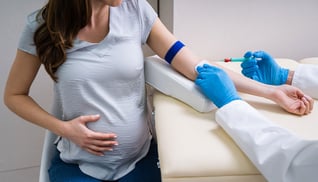
Because the chance of certain chromosomal conditions increases with age, your Moreland OB-GYN provider may recommend discussing genetic screening early in your pregnancy. These screenings can provide additional information about your baby's chances of having certain genetic or chromosomal conditions and help guide any next steps in your prenatal care.
Depending on your health history, family history, and personal preferences, your provider may discuss one or more of the following options:
Non-invasive prenatal testing (NIPT) — A simple maternal blood test, such as the Natera Panorama™ NIPT, that screens for certain chromosomal conditions, including Trisomy 21 (Down syndrome). Because it only requires a blood sample from the mother, there is no risk to the pregnancy.
Carrier screening — A blood test that determines whether you carry a gene for certain inherited conditions, such as cystic fibrosis or spinal muscular atrophy (SMA). This test can be performed before or during pregnancy.
Diagnostic testing — Procedures such as chorionic villus sampling (CVS) or amniocentesis provide a definitive diagnosis for certain chromosomal conditions. These tests may be recommended if screening results indicate a higher likelihood of a genetic condition or if additional information is needed.
Screening tests estimate the chance that a baby has certain conditions, while diagnostic tests can provide a definitive diagnosis, and both types of tests are optional. Your Moreland OB provider will explain the benefits, limitations, timing, costs, and possible next steps for each option so you can make the decision that's right for you and your family.
Learn more about genetic testing options by visiting our Screening Options for Genetic Abnormalities page.