

Key Takeaways:
- Vaping during pregnancy is not safe. E-cigarettes expose both you and your baby to nicotine, heavy metals, and other toxic chemicals that can harm fetal development.
- “Nicotine-free” doesn’t mean risk-free. Even vapes labeled nicotine-free may contain trace amounts of nicotine and other harmful substances that affect your baby’s growth and health.
- Vaping while breastfeeding can still harm your baby. Nicotine and toxic chemicals can pass through breast milk, affecting your baby’s sleep, feeding, and development.
- Safe, effective quit options are available. Moreland OB-GYN care providers can help you create a personalized plan to quit vaping.
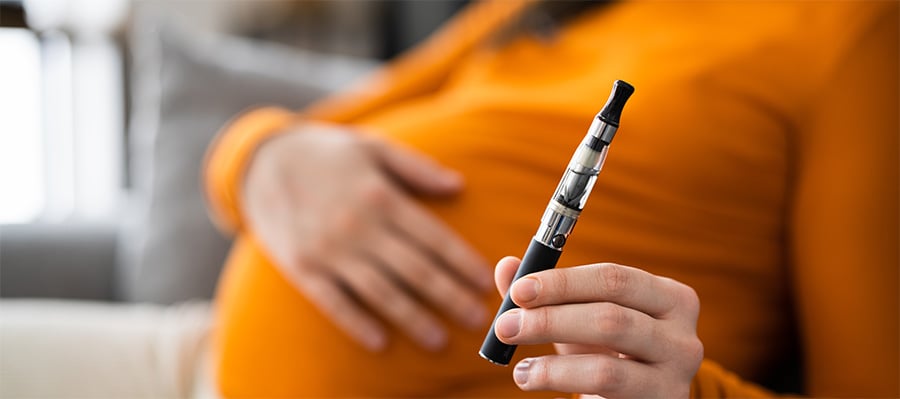
Many people view vaping as a “safer alternative” to smoking traditional cigarettes, especially when trying to quit nicotine. However, vaping during pregnancy is not safe.
The aerosol produced by e-cigarettes is not harmless “water vapor.” It can contain nicotine, heavy metals such as nickel, tin, and lead, as well as other toxic substances and microscopic particles that reach deep into the lungs. These ingredients can interfere with your baby’s development.
While research on the full effects of vaping during pregnancy is ongoing, medical experts agree that all forms of smoking—including e-cigarettes and vaping—should be avoided during pregnancy. Keep reading to learn how e-cigarettes work, why they’re dangerous, and how our care providers can support you in quitting.
What Are E-Cigarettes and How Do They Work?
E-cigarettes (or vapes) are battery-powered devices that heat a liquid—known as e-liquid or vape juice—into an aerosol that’s inhaled. Despite the name, this aerosol is not harmless vapor. It’s a mixture of chemicals that often includes:
- Nicotine – a highly addictive substance that can harm fetal brain and lung development.
- Food-grade flavorings – which can produce toxic byproducts like formaldehyde and acetaldehyde when heated.
- Propylene glycol and vegetable glycerin – common additives that can create irritants when vaporized.
In addition to these ingredients, e-cigarettes may contain heavy metals (nickel, tin, lead), diacetyl (linked to lung disease), benzene (found in car exhaust), and cadmium (a toxic metal that can cause respiratory problems).
Why Vaping Isn’t Safe During Pregnancy: What the Evidence Says
Although research on vaping during pregnancy is still emerging, medical experts strongly advise avoiding e-cigarettes and all forms of smoking while pregnant. The substances inhaled through vaping—such as nicotine, heavy metals, and other toxic chemicals—can harm both you and your developing baby.
Vape aerosol exposure can disrupt immune function, increase inflammation, and impact the cardiovascular and respiratory systems. These changes can heighten your risk of illness and make it harder for your body to adapt to the natural stresses of pregnancy.
Nicotine, in particular, crosses the placenta and can interfere with your baby’s brain, heart, lung, and organ development. It also reduces oxygen and blood flow, which can lead to:
- Low birth weight
- Preterm birth
- Lifelong effects on learning, attention, and memory
Evidence from cigarette smoking also links prenatal nicotine exposure, similar to the exposure you get with vaping, to babies being small for their gestational age, a condition associated with higher risks of cardiovascular and metabolic disease later in life.
Vaping may seem safer than smoking—but it’s not. The same toxins and heavy metals found in cigarette smoke can still reach your baby through vaping, affecting healthy growth and long-term development.
Can “Nicotine-Free” Vapes Still Harm Your Baby?
 Yes — “nicotine-free” vapes can still be harmful during pregnancy. The label can be misleading; studies have found that some products marketed as nicotine-free actually contain trace amounts of nicotine. Even without nicotine, e-cigarettes still expose you and your baby to heavy metals, volatile organic compounds, and other toxic chemicals linked to lung disease, cancer, and developmental harm.
“Nicotine-free” doesn’t mean risk-free. Even without nicotine, vaping exposes you and your baby to harmful chemicals and metals that can affect healthy fetal development.
How to Quit Vaping While Pregnant: Safe and Effective Options
Quitting vaping or smoking can be challenging, especially during pregnancy, but you don’t have to do it alone. Your Moreland OB-GYN care team is here to guide and support you.
The safest choice for you and your baby is to stop using all nicotine and vaping products. While quitting “cold turkey” works for some, it’s not your only option. There are several evidence-based approaches that can make the process easier and more effective:
- Behavioral Counseling — Techniques like CBT and motivational interviewing help you understand triggers, build coping skills, and improve your chances of quitting, especially when paired with pregnancy-specific resources.
- Nicotine Replacement Therapy (With Medical Supervision) — Options like patches or gum can ease cravings when used under your provider’s guidance and alongside counseling. Never begin these treatments without medical approval.
- Pregnancy-Specific Quit Programs — Programs such as SmokefreeMOM offer daily tips, encouragement, and personalized support to help you stay motivated and reach your goal.
Many pregnant women worry that quitting cold turkey will cause the baby to experience nicotine withdrawal, similar to withdrawal from illicit drugs like heroin. This is not true; no evidence shows that your baby will suffer from nicotine withdrawal if you quit smoking abruptly during pregnancy.
Not sure what over-the-counter medications are safe to take while pregnant? Download our Medication Guide During Pregnancy here.
Tips for Quitting Vaping and Smoking While Pregnant
Here are a few practical steps to help you stay on track as you quit vaping:
- Remove temptation: Get rid of all vapes, e-liquids, and related items from your home, car, and workspace.
- Create a supportive environment: If your partner or household members vape or smoke, ask them to quit with you or avoid vaping around you.
- Avoid triggers: Steer clear of places or situations where you’re likely to encounter vaping.
- Change your routine: Identify times or habits that make you reach for your vape and replace them with healthy alternatives, like taking a short walk or drinking water.
- Find healthy coping strategies: Prepare for cravings with calming techniques such as deep breathing, stretching, or chewing sugar-free gum.
- Seek support: Connect with friends, family, or a support group for encouragement. Hearing from others who’ve quit can help keep you motivated.
- Stay focused on your “why”: Remind yourself daily of your reasons for quitting—your health, your baby, and your future together.
Looking for in-depth guided advice throughout your pregnancy? Download our Prenatal Guide.

Vaping During Breastfeeding
The risks of vaping don’t end after pregnancy. Nicotine and other harmful substances from e-cigarettes can pass into breast milk. Vaping can also interfere with milk production, making it harder to maintain a healthy supply.
Even if you are not breastfeeding, exposure to secondhand vape aerosol can still harm your baby. The aerosol produced by e-cigarettes contains nicotine, ultrafine particles, and toxic chemicals that linger in the air and can be inhaled by infants.
Learn more about the importance of the fourth trimester and postpartum care.
Your Moreland OB-GYN Provider Is Here For You
You can talk openly with your Moreland OB-GYN provider or your Moreland pregnancy navigator about any nicotine use or vaping habits. Our main priority is supporting your health and your baby, and we are here to help you identify a comfortable and effective plan to help you quit vaping and smoking.
Request an appointment with your Moreland OB-GYN provider.
Looking for additional pregnancy resources? Check out the links below!
- Essential Oils and Pregnancy Safety
- 7 Common Myths About High-Risk Pregnancy
- Self-Care Resources for Women
- 11 Pregnancy Myths and Facts Every Woman Needs to Read
- Pregnancy Planning Kit: Free Download
- How to Choose the Right Hospital for Your Delivery
- Choosing your Child Care Provider
- Loud Noise Exposure During Pregnancy: Is It Safe for Your Baby?
- Perinatal Mental Health: Diagnosis and Treatment
- Best Baby Gear for New Moms